This incident of subtle (and not trans related) discrimination really stuck with me from a book I read recently called My Freshman Year: What a professor learned by becoming a student (Nathan, R. 2005. Cornell University Press). The professor is interviewing ‘Pat’, a student of color in a largely white university campus:
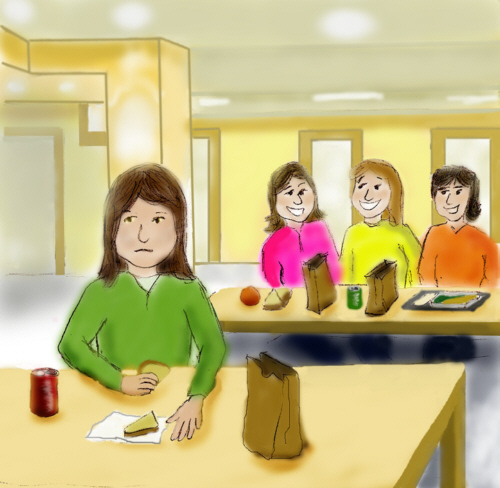
When I asked Pat, a Hispanic-Native American woman, whether she had ever considered rushing a sorority, she told me that she had in her freshman year, but “I could see that it wasn’t really right for me, because I’d pass by all the sorority tables – you know how they call out to girls to come over and take a look – well, I saw they called out to other girls but not me. They kinda ignored me, not hostile or anything, but not interested either”. (p. 61)
This type of discrimination is undoubtedly a common occurrence for transgender individuals, particularly those who are in-transition or who are “read” as transgender. They are at times (perhaps unconsciously) not-included, not invited to participate and ignored when in a “mainstream” environment. This can be particularly jarring for one who has presented in the past in such a way as to not incur any discrimination (like those who have presented as ‘straight white men’).
When it’s unnoticed
I think it’s likely that a lot of this discrimination goes unnoticed by a transitioning individual in part because of their satisfaction and happiness with transitioning (and thereby being less concerned with how others are reacting to them), and in part because it is indeed subtle. This not knowing you are being discriminated against can at times be an advantage, because one just proceeds as usual, and perhaps overcomes barriers by their non-acknowledgement of any prejudice coming their way.
When it is noticed
When you recognized that you are being discriminated against in some way it is extremely frustrating and upsetting.
I think one way for the trans person to deal with this is to proceed as if no discrimination is happening, even if you know it is. I think letting oneself get angry or defensive can only be counter-productive, even when one has a genuine beef. An unfortunate consequence of the transitioning process is that one becomes more visible at a time when most pe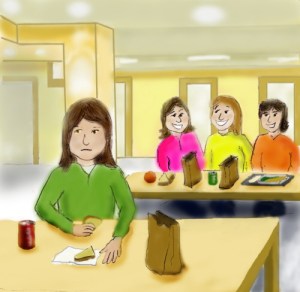 ople would prefer to be less visible. Developing coping mechanisms around discrimination are essential to making it through.
I’d like to turn the question out to all of you to find how people have dealt with this and to discover what has worked well when you do want to engage with the people who are discriminating against you. What do you do when you want to be accepted by a school group or any other group.
Find out about Psychotherapy when dealing with Gender variance in yourself or someone close to you.


 Transgender Mental Health